Choosing a base for seven nights
For a week, split-basing is tempting but rarely worth the packing. Pick one neighbourhood with green space and metro access and stay put. Our first choice is the Lodhi Colony and Jor Bagh belt: quiet colonial-era housing, Lodhi Garden across the road, Khan Market five minutes away, and the Yellow Line at Jor Bagh. Serviced apartments and small hotels here run ₹6,000 to ₹11,000 a night; The Lodhi sits at ₹22,000 upward. Nizamuddin East is the same idea with a more atmospheric edge, walking distance to Humayun's Tomb and the dargah lanes.
Below that, Hauz Khas and Safdarjung Enclave hold most of Delhi's good guesthouses at ₹3,500 to ₹6,500, with the Magenta and Yellow lines both nearby. Karol Bagh is the value option — big commercial hotels at ₹2,500 to ₹4,500 and a metro station — but the streets are traffic-heavy and it is a shopping district first. Connaught Place suits a first visit for its central position. Whatever you choose, check the room's actual window: Delhi hotel photography is famously generous, and a ₹5,000 room facing a lightwell is worse value than a ₹3,800 one facing a park.
Days one and two: Old Delhi and Shahjahanabad
Give the walled city two separate days rather than one long march. Day one: Red Fort at opening (₹600 foreign visitors, ₹35 Indian nationals, closed Mondays), then Chandni Chowk on foot, Paranthe Wali Gali for lunch, and Jama Masjid in the late afternoon with the ₹100 minaret climb. Day two goes deeper: Khari Baoli spice market by rickshaw, the Jain Digambar temple and its bird hospital opposite the fort, Kuremal Mohan Lal for kulfi in Sitaram Bazar, and the Sunehri Masjid and Fatehpuri Masjid bookending the main street.
Add the layers most visitors skip. Kashmere Gate and the Northern Ridge hold the 1857 sites — Flagstaff Tower, the Mutiny Memorial and Coronation Park up in Burari, where the durbar statues of British viceroys were exiled. Feroz Shah Kotla, the ruined fourteenth-century citadel on Bahadur Shah Zafar Marg with its Ashokan pillar, costs ₹300 for foreign visitors and takes 45 minutes. Dinner at Moti Mahal in Daryaganj, where tandoori chicken and butter chicken were commercialised after 1947, runs ₹700 to ₹1,000 a head. The Violet Line's Lal Qila and Jama Masjid stations serve all of this.
Day three: Lutyens' Delhi, museums and Khan Market
Take the imperial city slowly. Kartavya Path at 08:00, then the National Museum on Janpath from 10:00 — ₹650 for foreign visitors including audio guide, closed Mondays — where the Harappan bronze dancing girl and the Buddha relics from Piprahwa deserve real time. The National Gallery of Modern Art in Jaipur House charges ₹500 for foreign visitors and holds the Amrita Sher-Gil collection. Both sit within a 15-minute walk of each other. Break for lunch at Andhra Bhavan on Ashoka Road, where the unlimited meals thali is roughly ₹250 and the queue moves fast.
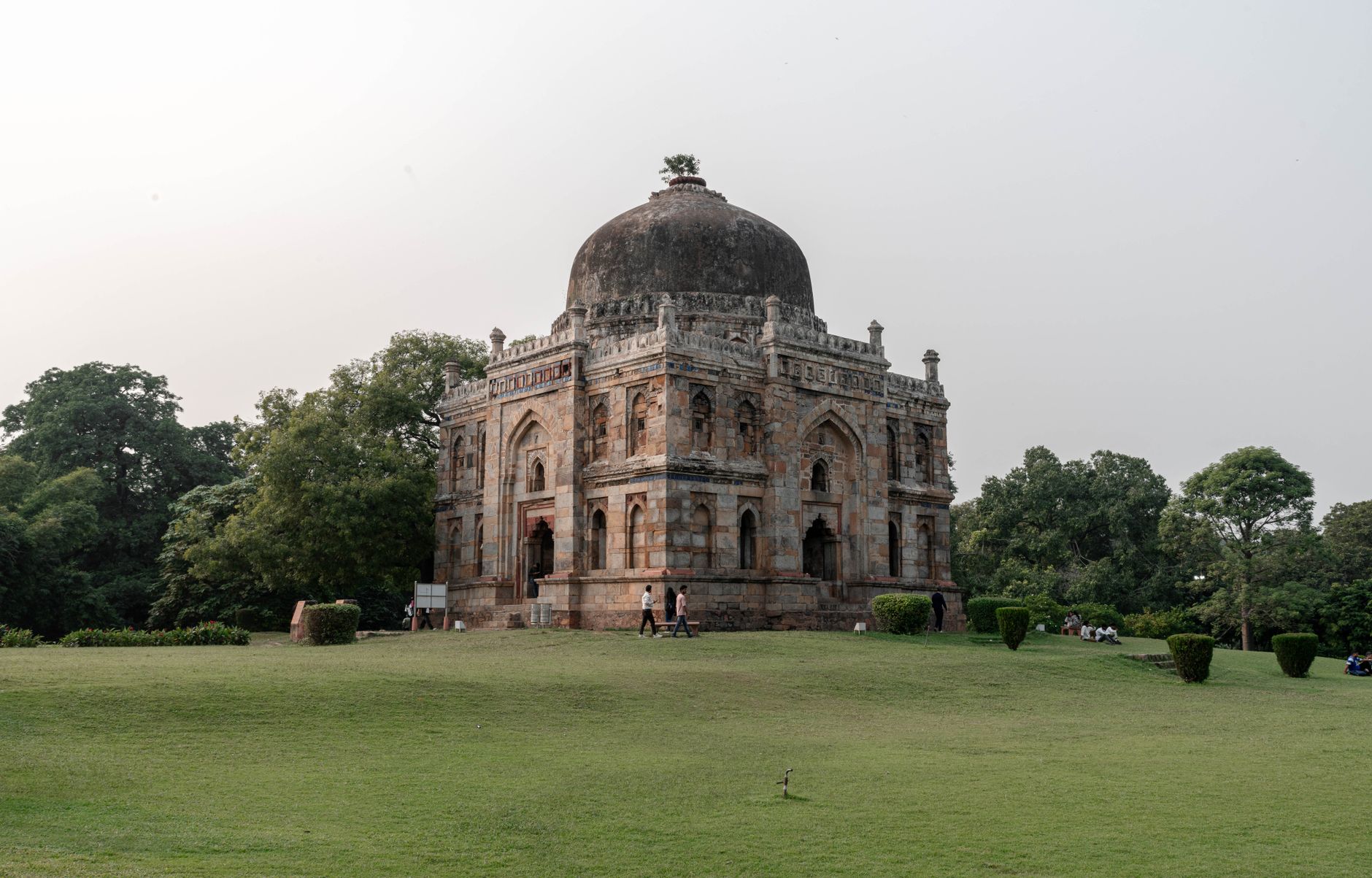
Afternoon is for Lodhi Garden, free and open 05:00 to 20:00, where the tombs of Muhammad Shah and Sikander Lodi sit in 90 acres of jogging paths and parakeets. Walk out the south gate to Safdarjung's Tomb (₹300 foreign visitors, ₹25 Indian nationals) or east to Khan Market, Delhi's most expensive retail per square foot, for bookshops like Bahrisons and a coffee at Perch. Evening option: a play or concert at the India Habitat Centre on Lodhi Road, where tickets are often free and listings are posted on the website a week ahead.
Day four: Mehrauli, Qutub Minar and the south
The oldest of Delhi's cities is in the far south. Ride the Yellow Line to Qutub Minar station, then an auto for ₹60. The Qutub complex (₹600 foreign visitors) contains the 1193 victory tower, the Quwwat-ul-Islam mosque built from 27 dismantled temples, and the fourth-century Iron Pillar that still refuses to rust. Immediately south, the Mehrauli Archaeological Park is free, unfenced and often empty: Balban's tomb, Jamali Kamali mosque, the Rajon ki Baoli stepwell and Metcalfe's folly are all inside a 20-minute walk of each other.
Head north-east afterwards to the Hauz Khas Complex, free and open until sunset, where Firoz Shah's madrasa and tomb overlook a thirteenth-century reservoir. The village lanes above hold design shops and cafés; it is a good spot to lose an hour. If you have appetite for one more monument, Chirag Delhi and the Begumpuri Masjid in Sarvapriya Vihar are the quietest medieval ruins in the city. Dinner in Green Park or at Rajinder Da Dhaba in Safdarjung Enclave, where a butter chicken and roti dinner comes to about ₹500 a head.
Day five: a day trip, and day six: crafts and qawwali
Use day five for Agra by the Gatimaan Express from Hazrat Nizamuddin at 08:10, returning 19:30, or for Jaipur on the 06:05 Ajmer Shatabdi from New Delhi station. Both are long but genuinely feasible in a day, and both are covered in detail in our day trip guides. If you would rather not leave the city, substitute Akshardham on the Blue Line at Noida Sector 16 — free entry, ₹250 for the exhibitions, closed Mondays, and no phones or bags past security, which means a 45-minute cloakroom process.
Day six is Delhi's living culture. Start at the Crafts Museum on Bhairon Marg near Purana Qila, where working artisans demonstrate in the courtyards. Then Dilli Haat at INA (₹30 entry, open 10:30 to 22:00) for state handicrafts and regional food stalls, reachable on the Yellow Line. In the evening, go to the Hazrat Nizamuddin Dargah for the Thursday qawwali, which builds from around 18:30 after maghrib prayers. Entry is free, shoes come off at the lane entrance, and a small donation is customary. Arrive by 18:00 for a place on the marble.
Day seven: slow Delhi, gardens and departure
Keep the last day loose and close to your hotel. Sunder Nursery, ₹100 entry, opens at 07:00 and is the best morning walk in the city — 15 restored Mughal monuments, a bonsai house and a lake, with the Humayun's Tomb complex through a connecting gate. Purana Qila, the sixteenth-century fort on Mathura Road built by Sher Shah Suri and Humayun, costs ₹300 for foreign visitors and adds an hour. Alternatively, cross the Yamuna-side ridge to Majnu ka Tila, the Tibetan colony north of Kashmere Gate, for thukpa and momos at ₹120 to ₹250 and cheap woollens.
Leave time for the practical end of the week. If you have bought textiles or brassware, the state emporiums on Baba Kharak Singh Marg do fixed prices and reliable shipping. Delhi's international departures cluster after 21:00, so most hotels will hold bags free after a 12:00 check-out. Airport Express trains from New Delhi station to Terminal 3 cost ₹60 and take 20 minutes, running from 04:45 to about 23:30; after that, use an app cab and allow 45 minutes from central Delhi, more on Friday nights.
Questions, answered
Is one week too long for Delhi?
No, if you include a day trip or two. Delhi has seven historic cities layered on top of each other, four UNESCO-listed sites and more than 1,200 protected monuments. A week lets you take Old Delhi in two visits rather than one exhausting sweep. Most travellers who leave after three days say they rushed it.
What is the best neighbourhood to stay in for a week?
The Lodhi Colony, Jor Bagh and Nizamuddin East belt, for green space, calm streets and Yellow Line access. Expect ₹6,000 to ₹11,000 a night for good mid-range rooms there. Hauz Khas and Safdarjung Enclave are the value alternative at ₹3,500 to ₹6,500. Karol Bagh is cheapest with a metro, but noisy and commercial.
Should I get a Delhi Metro tourist card?
For a full week, no — a standard smart card is better value. The tourist cards cost ₹200 for one day and ₹500 for three, which suits sprint trips. A regular Delhi Metro smart card gives a 10 percent fare discount and can be topped up at any counter. The deposit is refundable when you hand it back.
Can I do Agra and Jaipur both from Delhi in a week?
Yes, as two separate day trips on days five and, say, seven, but it makes for two very long days. Agra by Gatimaan Express is 100 minutes each way; Jaipur by Shatabdi is about four and a half hours each way. If you want both properly, spend a night in Agra instead. Otherwise pick one and keep the week in Delhi.
What is the qawwali at Nizamuddin Dargah and can anyone attend?
It is devotional Sufi singing performed at the shrine of Nizamuddin Auliya, strongest on Thursday evenings from about 18:30. Anyone may attend regardless of faith; heads should be covered and shoes left at the lane entrance. There is no ticket, though the singers pass a cloth for donations of ₹100 to ₹500. Go with minimal valuables, as the lanes are tight and crowded.
How much should I budget for a week in Delhi?
Mid-range travellers should plan on ₹45,000 to ₹65,000 for seven nights including hotel, food, transport and entries. Budget travellers manage on ₹18,000 to ₹25,000 with hostels and street food. Day trips add ₹3,000 to ₹6,000 each depending on train class and monument tickets. Foreign-visitor entry fees at ASI monuments are ₹600 versus ₹35 for Indian nationals.
Doing good is the business: every booking through Stay New Delhi funds one verified tonne of carbon removal — same room, same price, no markup.
Start Your Search