Where to Stay in New Delhi: Neighbourhoods, Real Prices and How to Choose
A practical guide to Delhi's main hotel districts — what each one costs, how far it sits from the airport and the sights, and which one suits your trip.
Aerocity and Mahipalpur: the airport belt
If you land at IGI Airport after midnight, Aerocity is the only sensible answer. This purpose-built zone off NH-8 sits five to ten minutes from Terminals 1 and 3 by shuttle, and every major international brand has a tower here — Novotel, Ibis, JW Marriott, Andaz, Roseate. Rates run roughly ₹6,000–9,000 for the mid-range flags and ₹12,000 upward for the five-stars, with weekend discounts when business travel thins out. You get 24-hour restaurants, a walkable pedestrian grid and nothing else: no monuments, no bazaars, no street life worth the name.
Mahipalpur, just south of the airport on the same road, is the budget counterpart. Guesthouses and three-star hotels cluster along the main strip, typically ₹1,800–3,500 a night, and the trade-off is real: traffic noise, pushy touts, and rooms that photograph better than they live. Book Mahipalpur only for a single pre-flight night, and only if you have checked recent reviews. For anything longer, pay the Aerocity premium or move into the city.
Connaught Place and Paharganj: the centre
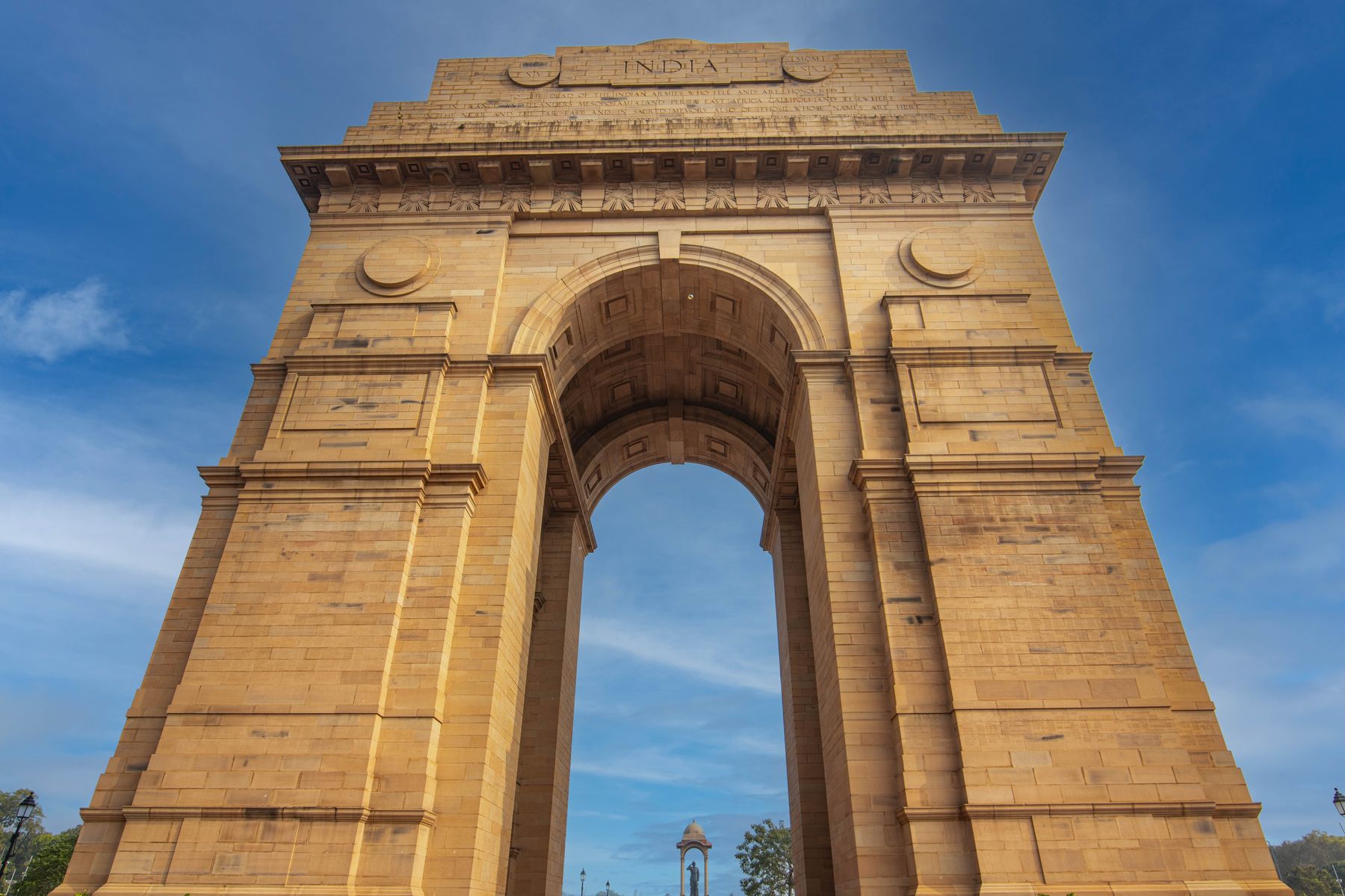
Connaught Place — Rajiv Chowk on the Blue and Yellow metro lines — is the most convenient base for first-timers. You can walk to Jantar Mantar and Agrasen ki Baoli, ride one stop to New Delhi railway station, and reach India Gate in fifteen minutes by cab outside peak hours. Georgian-style colonnades hold hotels like The Park, Hotel Palace Heights and a spread of business three-stars at ₹5,000–9,000; the Imperial, a Raj-era landmark on Janpath, sits at the top of the market. Expect traffic noise on the outer circle and insist on an inner-circle or upper-floor room.
Paharganj, the warren of lanes opposite New Delhi station, is the backpacker default: beds from ₹600, private rooms ₹1,200–2,500, rooftop cafés, cheap laundry and a lot of hassle. Main Bazaar is loud until 2am and the lanes flood in July and August. It is excellent value if you are young, travelling on a tight budget and comfortable saying no firmly. If you are not, skip it — the ₹2,000 you save will cost you sleep and patience.
South Delhi: Hauz Khas, Saket and Qutub
South Delhi is where I would book for a trip longer than three nights. Hauz Khas Village and neighbouring Green Park put you beside the 14th-century tomb-and-lake complex, with the Hauz Khas metro station on the Yellow line and Khan Market's restaurants a short auto ride away. Boutique guesthouses and serviced apartments run ₹4,000–8,000; the Roseate and similar properties push higher. Deer Park is genuinely green in February and March, and the neighbourhood is quiet enough to sleep in.
Saket, anchored by Select Citywalk mall and the Malviya Nagar metro, is the family-friendly option: chain hotels at ₹5,000–8,000, easy access to Qutub Minar (about 20 minutes by road), and Champa Gali's cafés behind the mall. The trade-off is distance — you are 14–16 km from Connaught Place, which means 45–70 minutes in morning traffic. Add the airport at roughly 30 minutes off-peak. If your itinerary is Qutub, Mehrauli and south Delhi markets, this wins; if it is Old Delhi and CP, it does not.
Old Delhi and the practical choice
Old Delhi around Chandni Chowk is not a hotel district. The lanes are narrow, the guesthouses near Jama Masjid are basic and male-oriented, and you will not find reliable mid-range comfort inside the walls. Stay nearby instead: Civil Lines and Kashmere Gate put you one or two metro stops from Chandni Chowk on the Violet and Yellow lines, with quieter streets and rooms at ₹3,000–5,500. Do Old Delhi as a morning — Jama Masjid at opening, a rickshaw through Chandni Chowk, breakfast at Karim's — and leave before the crowds thicken.
My verdict: book Aerocity for a layover, Connaught Place for a two-to-three-day first visit, and South Delhi for anything longer or slower. Best months are October to March, with November and February the sweet spots; April to June crosses 40°C and July to September brings humid monsoon rain. Always confirm the hotel's exact metro distance rather than trusting a map, and check that airport pickup is included — it removes the single most stressful part of arriving.
Questions, answered
Which area of New Delhi is best for a first-time visitor?
Connaught Place, known as Rajiv Chowk on the metro. It is central, walkable, on two metro lines, and within 20–30 minutes of India Gate, Jantar Mantar and New Delhi railway station. Mid-range rooms run roughly ₹5,000–9,000 a night.
How much does a hotel near Indira Gandhi International Airport cost?
Aerocity's international brands typically charge ₹6,000–9,000 for mid-range and ₹12,000 upward for five-stars, five to ten minutes from Terminals 1 and 3. Mahipalpur, just outside, offers guesthouses and three-stars at about ₹1,800–3,500 with noticeably more noise and hassle.
When is the best time to visit New Delhi?
October to March, with November and February the most comfortable. April to June regularly exceeds 40°C, and July to September is hot, humid monsoon season with frequent lane flooding in areas like Paharganj. Book well ahead for the December–January peak.
Doing good is the business: every booking through Stay New Delhi funds one verified tonne of carbon removal — same room, same price, no markup.
Start Your Search