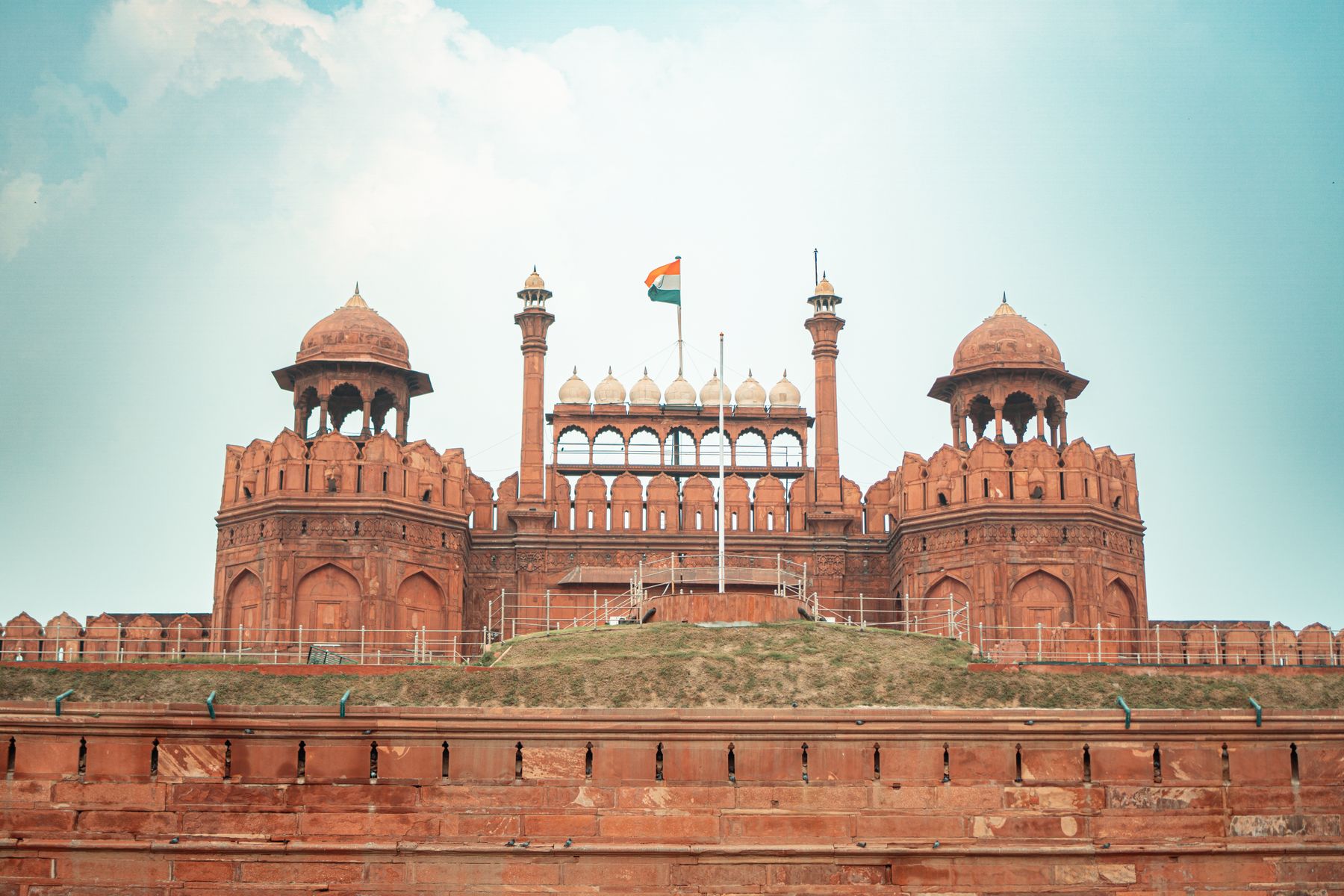
Start at the Red Fort and walk the Chandni Chowk spine
Begin at the Lahori Gate entrance of the Red Fort, a ten-minute walk from Chandni Chowk Metro station on the Yellow Line, or five minutes from Lal Qila station on the Violet Line. Fort hours run roughly from sunrise to sunset, closed on Mondays, and foreign-visitor tickets sit in the higher band while Indian tickets are much cheaper; buy at the counter rather than from touts near the car park. Give the fort ninety minutes to two hours, then exit west into the main Chandni Chowk boulevard.
The boulevard itself is now partly pedestrianised with wider footpaths, which makes the first stretch easy before 10am and crowded after 11. Walk west past the Digambar Jain Lal Mandir and its bird hospital opposite the fort, then the Gurudwara Sis Ganj Sahib a few hundred metres further on. Cover your head at the gurudwara and leave shoes at the counter. This is the calmest introduction to the area and the best place to get your bearings before entering the side lanes.
The lanes: Khari Baoli, Kinari Bazaar and Paranthe Wali Gali
Turn north off Chandni Chowk into Khari Baoli, Asia's largest wholesale market for dried goods, running up towards Fatehpuri Mosque. Go before noon on a weekday; by mid-afternoon the loading of sacks blocks the lane and the air is thick with dust. Keep to the edge, watch for handcarts, and carry water. From Khari Baoli, cut back south into Kinari Bazaar, the wedding-trim lane of silver braid and tinsel, then find Paranthe Wali Gali, a narrow street of stuffed-flatbread shops that has been trading for generations. Portions are large; one paratha between two is sensible.
The lanes here are genuinely tight and uneven, with open drains in places and step-downs at shopfronts. Wear closed shoes, not sandals. If mobility is limited, the main Chandni Chowk boulevard and the fort are manageable, but skip Khari Baoli and Kinari Bazaar entirely; the crowds and surface make them slow going. Late October to mid-March is the comfortable window, with December and January mornings cold enough for a jacket. Avoid May and June afternoons, when temperatures push past 40C and the lanes hold the heat.
Fatehpuri Mosque, shopping and the way back
The walk ends at Fatehpuri Mosque at the western end of Chandni Chowk, built in the seventeenth century and still an active place of worship. Non-Muslim visitors can generally look at the courtyard outside prayer times; dress conservatively and ask at the gate. From here, Fatehpuri Mosque is a short walk from Chandni Chowk station, so you can ride the Metro back rather than re-entering the crowd. If you have energy left, the Sis Ganj area and the lanes behind it reward another hour.
For dry goods, buy from the Khari Baoli shops in small quantities and ask for sealed packets; whole items travel better than ground. Skip the cycle-rickshaw touts who offer a fixed "heritage tour" at the station exits, and skip the electronics and clothing stalls along Chandni Chowk if you are short on time; the heritage is in the lanes, not the main road. A realistic pace is three to four hours on foot, roughly three kilometres, with tea stops. Start by 9am to be inside the fort before the heat builds.
Practicalities, timing and where to stay
Old Delhi is a day trip, not a base, for most travellers. Stay in central New Delhi, around Connaught Place or Janpath, where hotels range from budget guesthouses to mid-range properties, and reach Chandni Chowk in ten to fifteen minutes on the Yellow Line. Karol Bagh suits travellers arriving at New Delhi railway station, and Aerocity near the airport is convenient for early flights but adds forty-five to sixty minutes each way. Book a hotel with a metro station within a short walk; that single detail saves the most time.
Carry small notes for tea and snacks, keep a photo of your hotel address, and use a ride-hailing app for the return if the Metro is crowded. Fridays are quieter at the fort area because of midday prayers, while Sundays bring the heaviest domestic crowds. If you only have one day in the city, do this walk in the morning and Humayun's Tomb in the afternoon. If you have two, split them and add Qutub Minar. The walk suits a confident first-time visitor who is comfortable with crowds.
Hotels in Delhi
Questions, answered
How long does the Old Delhi heritage walk take?
Plan three to four hours on foot, roughly three kilometres, including ninety minutes at the Red Fort and short tea stops. Starting by 9am keeps you ahead of the heat and the worst crowding in Khari Baoli.
Which Metro station is best for starting the walk?
Chandni Chowk on the Yellow Line or Lal Qila on the Violet Line both put you within a ten-minute walk of the Red Fort's Lahori Gate. Chandni Chowk station is the better choice if you plan to walk the full route west to Fatehpuri Mosque.
Is the Red Fort closed on any day?
The fort is generally closed on Mondays, so plan the walk for Tuesday to Sunday. Hours run roughly sunrise to sunset; check the official listing the day before, as timings shift seasonally.
When is the best time of year to do this walk?
Late October to mid-March is the comfortable window, with December and January mornings cold enough for a jacket. Avoid May and June afternoons, when temperatures exceed 40C and the lanes trap the heat.
What should I wear and carry in the lanes?
Closed shoes for uneven surfaces and open drains, modest clothing that covers shoulders and knees for the mosque and gurudwara, and water. Carry small notes for snacks, and keep bags in front of you in the market lanes.
Where should I stay for this walk?
Base yourself around Connaught Place or Janpath in central New Delhi and take the Yellow Line to Chandni Chowk in ten to fifteen minutes. Karol Bagh works for rail arrivals; Aerocity near the airport adds forty-five to sixty minutes each way.
Can I do the walk with limited mobility?
The fort and the widened Chandni Chowk boulevard are manageable, but Khari Baoli and Kinari Bazaar are narrow, uneven and crowded. Skip those two lanes and use the Metro between stops rather than covering the full route on foot.
How much should I budget for food and entry?
Entry tickets vary by visitor category, so check at the counter rather than relying on touts near the car park. Street food and tea are inexpensive; one stuffed paratha between two people is a sensible portion in Paranthe Wali Gali.
Doing good is the business: every booking through Stay New Delhi funds one verified tonne of carbon removal — same room, same price, no markup.
Start Your Search