Getting Around New Delhi on a First Visit: Auto, Metro or Walking?
Compare the three ways to move through New Delhi by cost, speed and stress, with street-level detail for Connaught Place, Old Delhi and south Delhi.
Auto-rickshaw: cheap, fast, and best for short hops
Auto-rickshaws are the default for short trips and the easiest way to reach places the Metro does not serve. Fares are metered, but drivers often quote a flat rate, especially from New Delhi railway station or Connaught Place. For a 3–5 km ride expect roughly ₹80–150; from CP to India Gate (about 3 km) it is a quick ₹100–120. Always agree the fare before getting in or insist on the meter. Apps such as Uber and Ola offer autos in many areas, which removes haggling and gives a fixed price up front.
Autos are open-sided, so they are pleasant from October to March but punishing in May and June, when temperatures cross 40°C and dust hangs in the air. They are also the practical choice for Old Delhi: the lanes around Chandni Chowk and Fatehpuri are too narrow for cars, and an auto can drop you at the edge of the market. I would book an auto for any trip under 5 km, for Old Delhi, and for late-night returns when the Metro has stopped.
Delhi Metro: the fastest way across the city
The Metro is clean, air-conditioned and remarkably cheap. Fares run from ₹10 for a single stop to ₹60 for the airport line; a trip from Rajiv Chowk to Hauz Khas (about 12 km) costs around ₹30 and takes 25 minutes. Trains run from roughly 5:30 am to 11:30 pm, with services every 2–5 minutes at peak times. A day pass (₹150) or a stored-value card makes sense if you plan more than three rides. Note that the Airport Express Line is separate and charges ₹60 from New Delhi station to IGI Airport.
The catch is that the Metro does not go everywhere. Old Delhi is served by Chandni Chowk station on the Yellow Line, but the walk from the platform to the main bazaar is hot and crowded. South Delhi neighbourhoods such as Hauz Khas and Saket are well connected, but Lutyens' Delhi around India Gate and Rashtrapati Bhavan has no Metro station within easy walking distance. I use the Metro for cross-city trips and for the airport, but not for sightseeing within a 2 km radius.
Walking: rewarding in pockets, not as a whole-city strategy
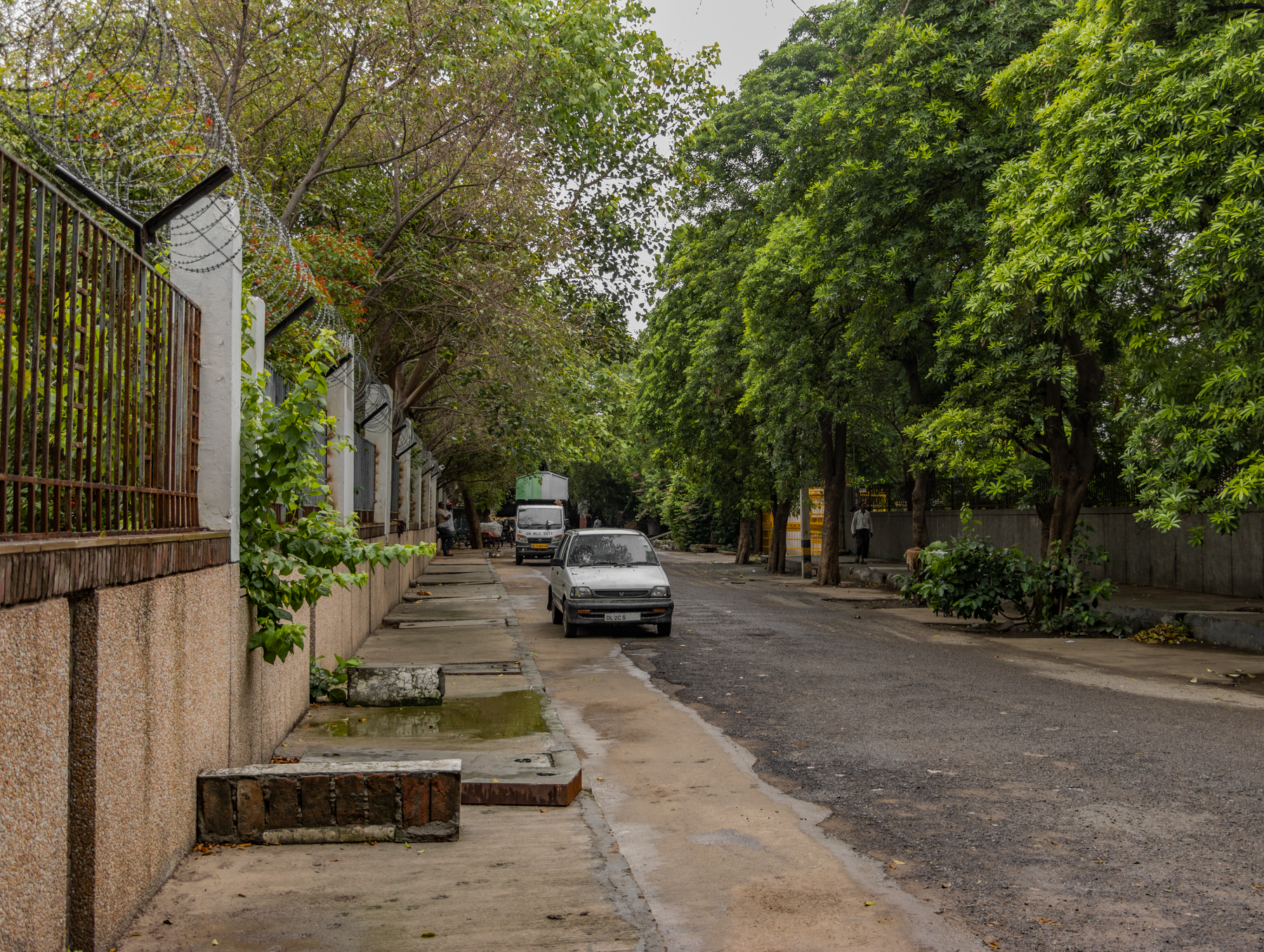
Walking is the best way to see specific areas: the colonnades of Connaught Place, the Mughal lanes of Nizamuddin, and the tree-lined streets of Khan Market and Sunder Nagar. But New Delhi is not a walking city overall. Distances are long — from Connaught Place to Humayun's Tomb is 6 km — pavements are uneven, and crossing major roads such as Janpath or Ring Road requires nerve. Summer heat from April to June makes midday walking uncomfortable even for fit travellers.
Use walking for neighbourhood exploration and pair it with short autos. A good pattern is to take the Metro to a station, walk a 2 km loop, then take an auto back. In Old Delhi, walking is the only way to see the spice market and the lanes behind Chandni Chowk, but go early (before 9 am) to avoid crowds and heat. I would not plan a day around walking between sights; treat it as a way to fill the gaps between Metro stops and auto rides.
Which to book, and where to stay
For a first visit, base yourself near a Metro station. Connaught Place (Rajiv Chowk station) puts you on the Yellow and Blue lines, with autos always available and many mid-range hotels within a 10-minute walk. Karol Bagh is cheaper, on the Blue Line, and 15 minutes from CP by Metro. South Delhi around Hauz Khas is quieter and greener, with good restaurants, but you will rely more on autos for sightseeing. I would book a hotel in Connaught Place or Karol Bagh for a first trip, and use the Metro for long hops and autos for short ones.
Skip cycle-rickshaws in the midday heat and avoid unmarked taxis at the airport; use the prepaid taxi counter or the Airport Express. For a 3-day trip, a Metro card plus ₹500 of auto fares covers most movement. If you are staying in a hotel in Aerocity or Mahipalpur, near the airport, factor in 20–30 minutes and ₹200–300 by auto to reach the nearest Metro station (Delhi Aerocity on the Airport Express).
Hotels in Delhi
Questions, answered
Is it safe to take autos at night in New Delhi?
Autos are generally available until about 11 pm, but after that you may struggle to find one. Use app-based autos or taxis at night. Agree the fare first, and share your route with your hotel. I would avoid unmarked autos from busy stations late at night.
Can I use a credit card on the Delhi Metro?
Yes, most stations have ticket machines that accept cards, and you can buy a stored-value Metro card with cash or card at customer service counters. The Airport Express accepts cards at its own counters. Foreign cards sometimes fail, so carry some cash as a backup.
How much does a taxi from IGI Airport to Connaught Place cost?
A prepaid taxi from Delhi Airport to Connaught Place costs roughly ₹500–600 and takes 30–45 minutes depending on traffic. The Airport Express train is faster (about 20 minutes) and cheaper at ₹60. I would take the train if I am travelling light.
Is Old Delhi walkable from the nearest Metro station?
Chandni Chowk station on the Yellow Line is about a 10-minute walk from the main bazaar, but the route is crowded and hot. Many travellers take a short auto from the station. Once inside the lanes, walking is the only option. Go early morning for cooler, quieter streets.
What is the best way to get around if I have limited mobility?
Autos and taxis are easier than the Metro, which has stairs and long walks at interchange stations. Some stations have lifts, but they are not always working. Hiring a car with a driver for a day (₹1,500–2,000) gives you door-to-door access and is worth considering.
Do I need a Metro card for a short visit?
For one or two rides, single-journey tokens are fine. For three or more rides in a day, a day pass (₹150) or a stored-value card saves time in queues. The card costs ₹50 deposit, refundable at the end of your trip. I would get a card if staying more than two days.
Are autos metered, and what if the driver refuses?
Autos are supposed to use meters, but many drivers quote flat fares, especially in tourist areas. If the driver refuses the meter, negotiate before you get in. App-based autos show the fare up front. For short trips, the difference is small; for longer ones, insist on the meter or use the app.
Which area should I stay in to use the Metro most?
Connaught Place (Rajiv Chowk) is the most connected, with two major lines. Karol Bagh on the Blue Line is cheaper and still central. Hauz Khas on the Yellow Line suits south Delhi. I would pick Connaught Place for a first visit because it puts you within walking distance of many sights and restaurants.
Doing good is the business: every booking through Stay New Delhi funds one verified tonne of carbon removal — same room, same price, no markup.
Start Your Search